
How they kept food before refrigeration: cellars, salt, sugar, smoke and fat, and every method still works.
A farmhouse in 1890 had no refrigerator, no freezer, and roughly five months of the year when nothing grew. It still ate. Here is how.
The methods below are not quaint. Every one of them is a technique for making water unavailable to bacteria, and every one of them still works. Several are in your kitchen now, wearing different names.
How they kept food before refrigeration, without cold
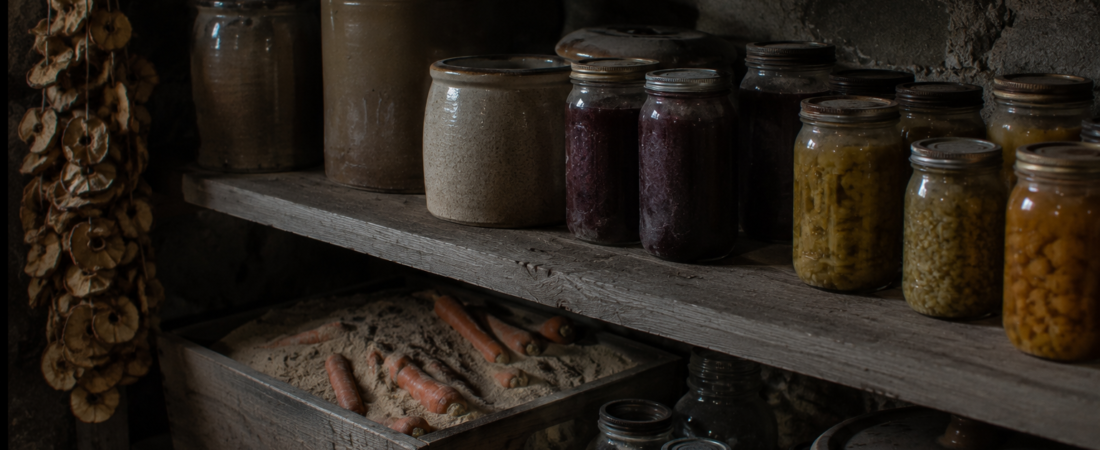
The cellar. Below about four feet, soil holds a steady temperature year round, somewhere near 50°F. A cellar dug into that is a refrigerator that costs nothing to run. Root vegetables, apples, cabbages and crocks of salted butter went down there and stayed useable for months.
The cold pantry. A north-facing room with a stone or slate shelf, no heat, and a small vent. Cooler than the kitchen by ten degrees or more, and where milk, cream, pies and cooked meat lived between meals. Almost every old recipe that says keep in a cool place means this room.
The ice house. Ice cut from a pond in January, packed in sawdust underground, lasting into August. Not every household had one, but a village usually did.
Removing the water
Salting draws water out of both the food and any bacteria in it. Salt pork, salt fish and salt butter were the backbone of a Maritime winter.
Drying does the same thing with air. Apples were sliced into rings and hung on strings above the stove. Herbs were tied in bunches. Peas and beans were left on the plant to harden.
Sugar works exactly like salt. A preserve is not sugary because they liked it sweet. It is sugary because at that concentration nothing can grow in it.
Sealing the air out
Potting under fat. Cooked meat packed into a crock and sealed with a layer of clarified butter or lard, which sets solid and locks air out. Weeks at cellar temperature.
Waxing and burying. Cheese sealed in wax. Carrots and beets layered in damp sand in a box, which keeps them from drying out while keeping them apart.
Bottling. By the 1890s glass jars with rubber rings were widely available, and home canning became the great change of the period. It is the one method on this list where the modern safety guidance genuinely differs from the old, and it differs for good reason.
One thing worth saying plainly
Home canning is the single kitchen job where being wrong is dangerous rather than disappointing. Old recipes for bottling low-acid foods, meaning any vegetable, meat, poultry, fish or milk, do not meet current safety guidance and should not be followed as written.
Fruit, jams, jellies and properly acidified pickles sit below the acidity line where nothing harmful grows, and a boiling water bath handles them. Everything else needs a pressure canner. That is not fussiness, and it is the one place where the old way should simply be set aside.
Everything else on this list you can do tomorrow.
The short version
Before refrigeration, food was kept by making water unavailable: salting, drying, sugaring, sealing under fat, and storing at the steady 50°F of a cellar. Most of it still works, and a jar of preserves is sweet for exactly that reason.
Struggling to read an old recipe?
How to Read an Old Recipe translates the vague bits: old measures converted, oven descriptions in real degrees, and the instructions that leave something out. Free, two printable pages.
More of this sort of thing is in the cookbooks, where every recipe carries the history that explains why it is made that way.