FREE. TWO PRINTABLE PAGES
How to Read an Old Recipe
A gill, a moderate oven, butter the size of an egg. What they meant, in numbers you can use.
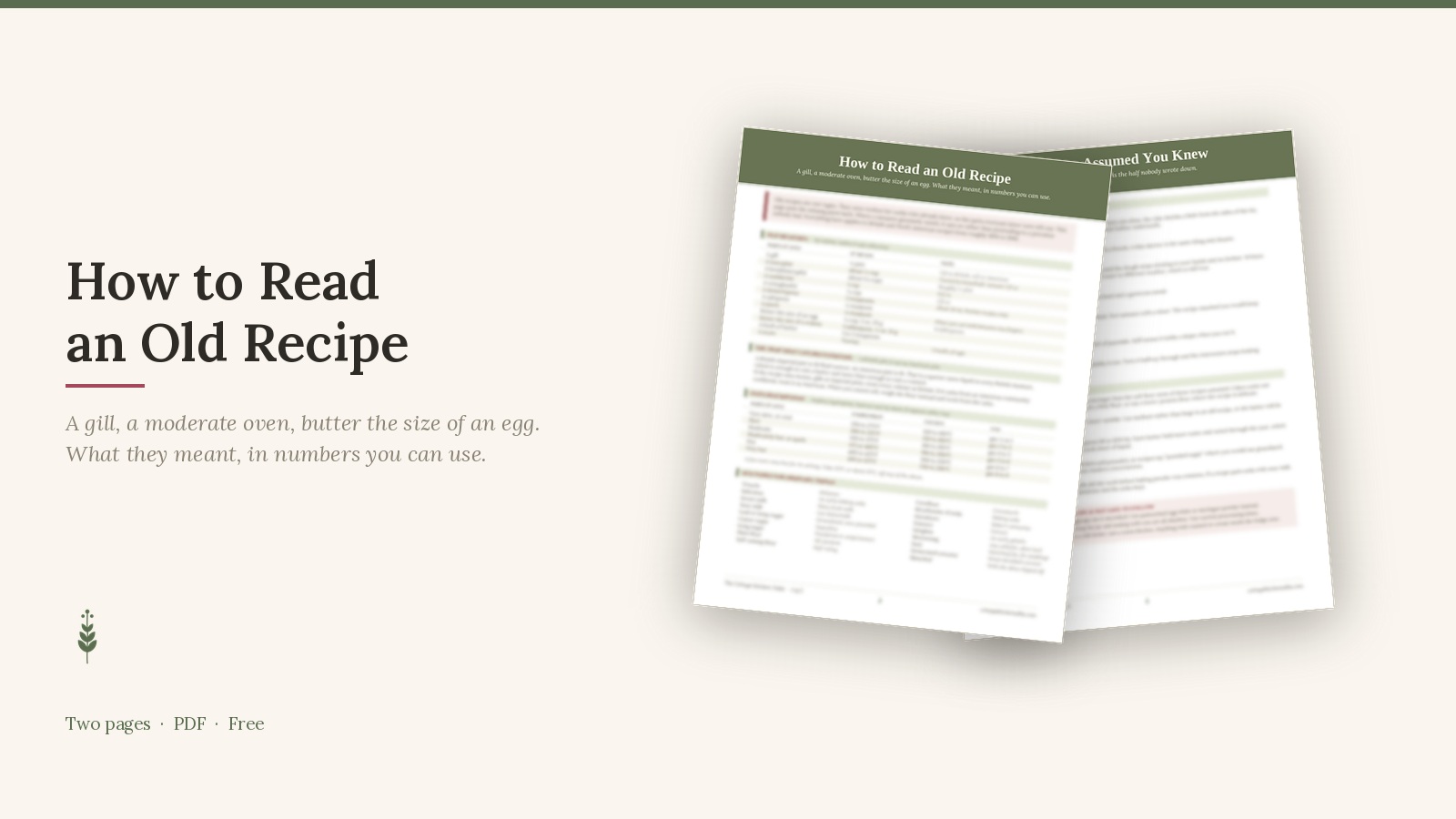
Old recipes are not vague. They were written for cooks who already knew, so the parts everyone knew were left out. This puts the missing parts back.
Where a measure genuinely varied, it says so rather than pretending to a precision nobody had. Everything on it applies to British and North American recipes from roughly 1850 to 1940.
PDF, 2 pages. The download link arrives by email straight away. One click to unsubscribe, any time.
What is on it
Old measures
A gill, a teacupful, a wineglass, a saltspoon, and butter measured by the size of a walnut or an egg. Each one in cups and grams, with a note where it genuinely varied.
Oven descriptions
Slow, moderate, quick, brisk and hot, each given a range in Fahrenheit and Celsius with the gas mark alongside.
What they assumed
“Bake until done.” “A straw comes out clean.” “As much flour as it will take.” The second half of an old recipe is the half nobody wrote down.
What genuinely changed
Flour, butter fat content, egg size and sugar refinement are all different now. Some old recipes fail for that reason alone, and this says which.
Where not to follow it
The places an old recipe is genuinely unsafe by modern standards, and what to do instead. Short, specific, and the part most reprints leave out.
Works on any old recipe
British and North American recipes from roughly 1850 to 1940. A Victorian cookbook, an inherited handwritten card, a scanned community cookbook.
Then put it to work
Every recipe on this site is already translated, with converted measures, real oven temperatures, and how long the thing keeps. Free to read and free to print.